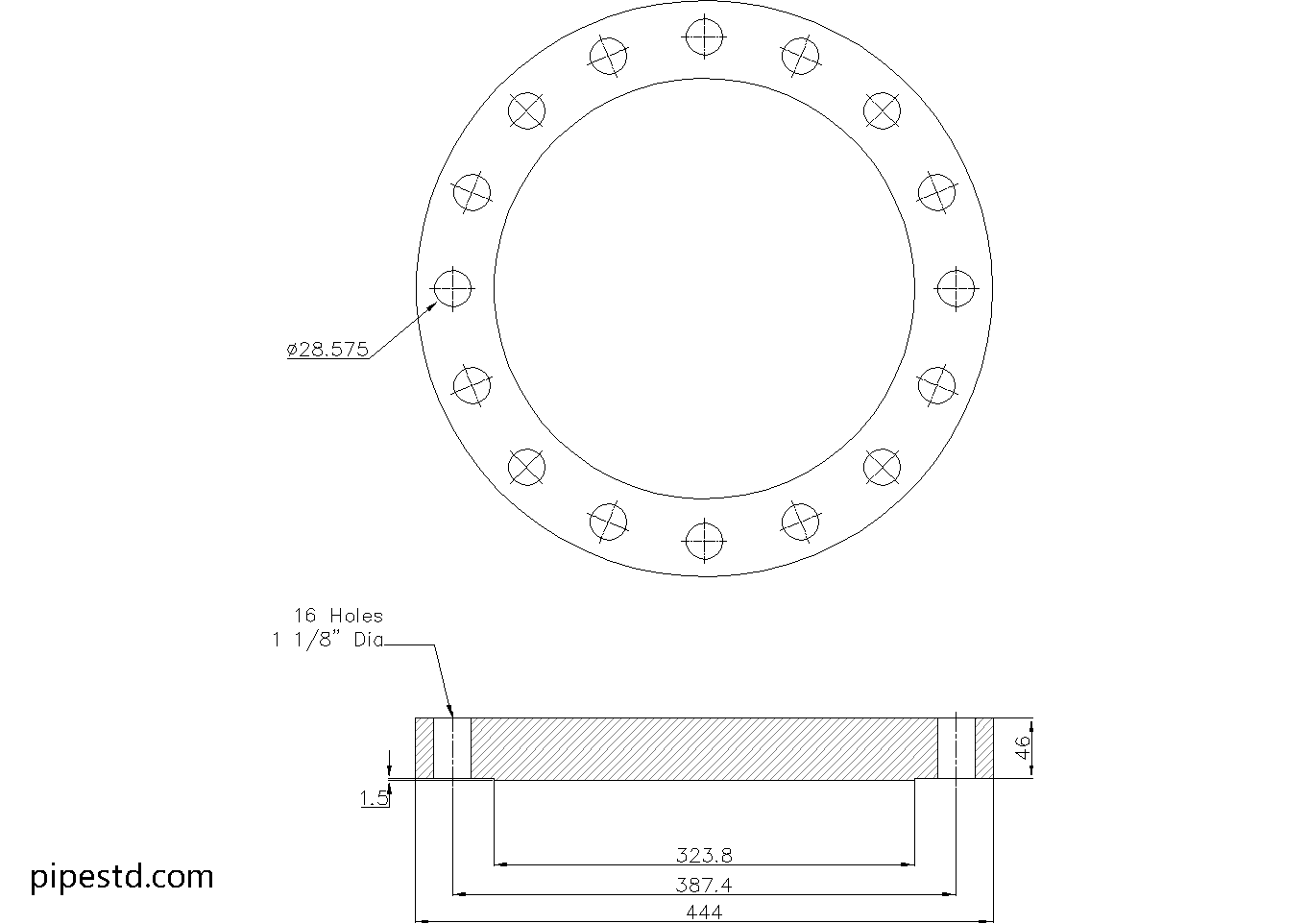
This reference page provides the dimensional data, bolt information, weight, and CAD resource for a Blind Flange 10 Inch Class 300. Use the source list below when checking a piping layout, preparing fabrication details, or coordinating a flange connection with equipment.
A blind flange has no center bore, so it closes a flanged connection rather than allowing pipe flow through the flange. For related terminology, compare this component with other flange types and review the site’s pipe dimensions and schedules resources.
Blind Flange 10″ Class 300
Blind Flange 10″ Class 300 is used to seal the end of a piping system or close off a flange connection in Class 300 service. It is a solid flange without a center bore and is commonly used in industrial piping systems, maintenance isolation points, and future pipeline expansion connections where a higher pressure rating is required.
This dimension data is based on ANSI / ASME B16.5-2020.
Blind Flange 10″ Class 300 Dimensions
- Reference Standard: ANSI / ASME B16.5
- Nominal Pipe Size (NPS): 10″
- DN Size: DN250
- Flange Thickness: 46mm
- Weight: 57kg
- Stud Bolt Size: 1″ UNC (or M27) x 160 Long
- Number of Bolts: 16
- Hole Diameter: 1 1/8″ (28.575mm)
What Is a Blind Flange?
A blind flange is a blank flange used to close the end of a pipeline, vessel nozzle, or equipment connection. It provides a secure shutoff point and is often selected when future maintenance, inspection, or line extension may be required.
Common Applications
Blind Flange 10″ Class 300 is commonly used for:
- Pipe end closure
- Equipment isolation
- Valve and nozzle blanking
- Maintenance shutdown work
- Process and utility piping systems
- Higher pressure piping applications
CAD Drawing Download
This page includes the CAD drawing file for Blind Flange 10″ Class 300, which can be used for drafting, detailing, and piping layout coordination.
Available Blind Flange Class 300 Sizes
This size is part of the Blind Flange Class 300 series. Check other sizes in the same category to find matching dimension data and CAD files for your project.
Notes
Before fabrication or installation, always confirm the latest project requirements, flange material specification, gasket type, bolt length, and applicable pressure-temperature rating.
How to Use This Blind Flange Reference
The existing data identifies the nominal pipe size, DN designation, flange thickness, listed weight, stud bolt information, bolt quantity, and hole diameter. These items are typically used together when checking a flange arrangement, creating a piping drawing, or coordinating a connection with a valve, vessel nozzle, or other equipment.
Understanding the Key Terms
- Nominal pipe size and DN size: These are designation systems used to identify the connected piping size. They are reference designations, not a direct measurement of every flange feature.
- Class: The Class 300 designation identifies the flange pressure-temperature rating category. The allowable rating must be checked against the applicable material, temperature, gasket, joint, and project requirements.
- Blind flange: Because the flange is solid, it can provide an end closure or temporary blanking point where isolation, inspection, maintenance, or future expansion is required.
- Bolt and hole information: The listed stud size, length, quantity, and hole diameter should be coordinated with the mating flange, gasket, washers, nut arrangement, and available installation clearance.
Drafting and CAD Coordination
The downloadable DWG file can support preliminary drafting, piping layout coordination, and detail development. Before issuing a drawing for fabrication, verify the mating flange orientation, facing and gasket details, bolt access, material specification, and project tolerances. Browse the site’s CAD and DWG reference resources for related piping components.
Installation and Engineering Checks
Do not select a blind flange from nominal size and Class alone. Confirm the applicable standard, flange material, service conditions, gasket selection, bolting requirements, and pressure-temperature rating with the project documents and a qualified engineer. The local dimensional list on this page remains the controlling reference for the stated component data.
Frequently Asked Questions
What is a Blind Flange 10 Inch Class 300 used for?
It is used to close a flanged piping connection, pipe end, equipment nozzle, or maintenance isolation point. It may also be used where a future line extension or access point is planned.
Does a blind flange have a center bore?
No. A blind flange is a solid flange without a flow opening through its center.
What bolt information is listed for this flange?
The source data lists the stud bolt size, bolt length, number of bolts, and hole diameter. Confirm these details against the mating flange and the project’s bolting specification before installation.
Can the DWG file be used directly for fabrication?
The DWG is intended to assist drafting, detailing, and piping layout coordination. It should be checked against the project specification, mating components, material requirements, and fabrication tolerances before release.
Is Class 300 a universal pressure value?
No. A flange class is a rating category, not one universal allowable pressure for every service. The applicable pressure-temperature rating depends on the relevant material and design conditions.
What should be checked before installation?
Confirm the standard, material, gasket, bolting, mating flange, facing details, installation clearance, and applicable pressure-temperature requirements. Use the project documents and qualified engineering review for final selection.