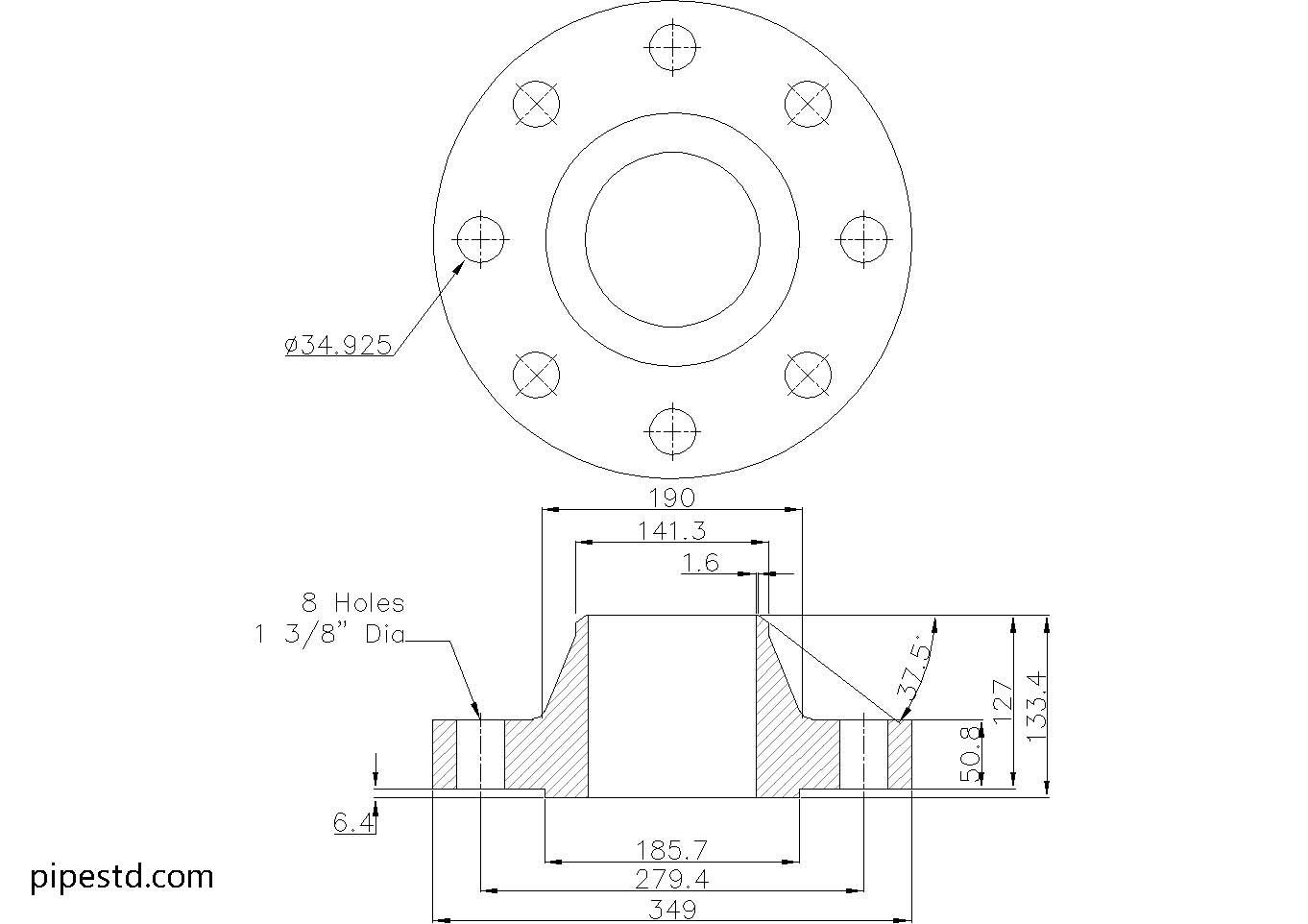
This reference provides the published dimensions and identification details for a Weld Neck Flange 5 Inch Class 900. Use the data for piping layout, flange selection, CAD coordination, and preliminary fabrication review while treating the project specification and qualified engineering review as controlling.
The page separates fixed flange details from items that depend on the connected pipe. In particular, the bore must be checked against the pipe schedule and wall thickness before a drawing, purchase order, or fabrication detail is finalized.
Weld Neck Flange 5″ Class 900
Weld Neck Flange 5″ Class 900 is widely used in piping systems that require strong, leak-resistant flange connections under high-pressure service. It features a long tapered hub that provides excellent stress distribution and is commonly applied in process piping, utility lines, refineries, power plants, and industrial systems where welding strength and reliability are essential.
This dimension data is based on ANSI / ASME B16.5-2020.
Weld Neck Flange 5″ Class 900 Dimensions
- Reference Standard: ANSI / ASME B16.5
- Nominal Pipe Size (NPS):5″
- DN Size: DN125
- Outside Diameter:349mm
- Flange Thickness:50.8mm
- Hub Diameter:190mm
- Bore Diameter: varies depending on pipe schedule and pipe wall thickness
- Raised Face Diameter:185.7mm
- Weight: 39.5kg
- Number of Bolts:8
- Stud Bolt Size: 1 1/4″ UNC (or M33) x 190 Long
- Hole Diameter: 1 3/8″ (34.925mm)
What Is a Weld Neck Flange?
A weld neck flange is a type of pipe flange designed with a long tapered hub that is welded directly to the pipe. This design helps reduce stress concentration at the flange base and provides better strength under pressure, temperature fluctuation, and cyclic loading.
Common Applications
Weld Neck Flange 5″ Class 900 is commonly used for:
- Process piping systems
- Oil and gas lines
- Refinery and petrochemical piping
- Very high-pressure service
- Pressure piping connections
- Industrial fabrication and maintenance work
CAD Drawing Download
This page includes the CAD drawing file for Weld Neck Flange 5″ Class 900, which can be used for drafting, detailing, piping layout coordination, and fabrication reference.
Available Weld Neck Flange Class 900 Sizes
This size is part of the Weld Neck Flange Class 900 series. Check other sizes in the same category to find matching dimension data and CAD files for your project.
Notes
Before fabrication or installation, always confirm the latest project requirements, flange material specification, pipe schedule, bore size, gasket type, bolt length, and applicable pressure-temperature rating.
How to Use This Flange Reference
A weld neck flange is attached to the pipe through its tapered hub. That geometry supports a gradual transition between the flange and pipe and is intended to limit stress concentration at the connection. The flange face, bolt holes, hub, and bore each serve different coordination purposes, so they should not be treated as interchangeable dimensions.
Dimension and bolt-check workflow
- Confirm the NPS and corresponding DN designation before matching the flange to a pipe or fitting.
- Use the listed outside diameter, thickness, hub diameter, and raised face diameter when coordinating the flange with piping layouts and CAD or DWG details.
- Verify the bore against the actual pipe schedule and wall thickness. The bore is not a universal value for every pipe configuration.
- Check the bolt count, stud bolt designation, bolt length, and hole diameter together. A bolt that matches the nominal designation may still require project-specific confirmation for the gasket, flange facing, and joint assembly.
- Confirm the listed weight is appropriate for the handling, support, and material assumptions used in the project documentation.
Useful related references
For a complete piping review, pair this page with references for pipe schedules, flange dimensions, raised-face flanges, stud bolts, and gasket selection. These related topics help connect the flange dimensions to the pipe wall, bolted joint, sealing surface, and fabrication detail.
CAD and drafting notes
The downloadable DWG is useful for layout and detailing reference. Before issuing a drawing, compare the CAD geometry with the authoritative dimension list on this page and with the project specification. Pay particular attention to the flange face, bolt-hole pattern, hub transition, and pipe-side bore.
Dimension references do not by themselves establish pressure-temperature suitability, material compatibility, weld procedure requirements, or final joint integrity. Those checks belong to the applicable project documents and responsible engineering team.
Frequently Asked Questions
What is a weld neck flange?
A weld neck flange has a long tapered hub and is welded directly to the pipe. The hub provides a gradual transition that can help reduce stress concentration at the flange-to-pipe connection.
What does Class 900 identify?
Class 900 identifies the flange pressure class designation used for matching compatible piping components. The applicable pressure-temperature limits must still be confirmed from the governing standard, material specification, and project requirements.
Is the bore fixed for every 5-inch weld neck flange?
No. The bore varies with the connected pipe schedule and wall thickness. Confirm the pipe information before selecting or fabricating the flange.
How many bolts are listed for this flange?
The source data lists 8 bolts. Confirm the complete bolting arrangement, stud designation, length, hole diameter, gasket, and tightening requirements before assembly.
What standard is identified for the dimension data?
The source identifies ANSI / ASME B16.5 and states that the dimension data is based on the cited edition. Project documentation should confirm the governing standard and any required revision before procurement or fabrication.
Can the DWG file be used for fabrication?
The DWG is provided as a drafting, detailing, layout coordination, and fabrication reference. It should be checked against the page data, project requirements, and approved fabrication documentation before it is released for production.