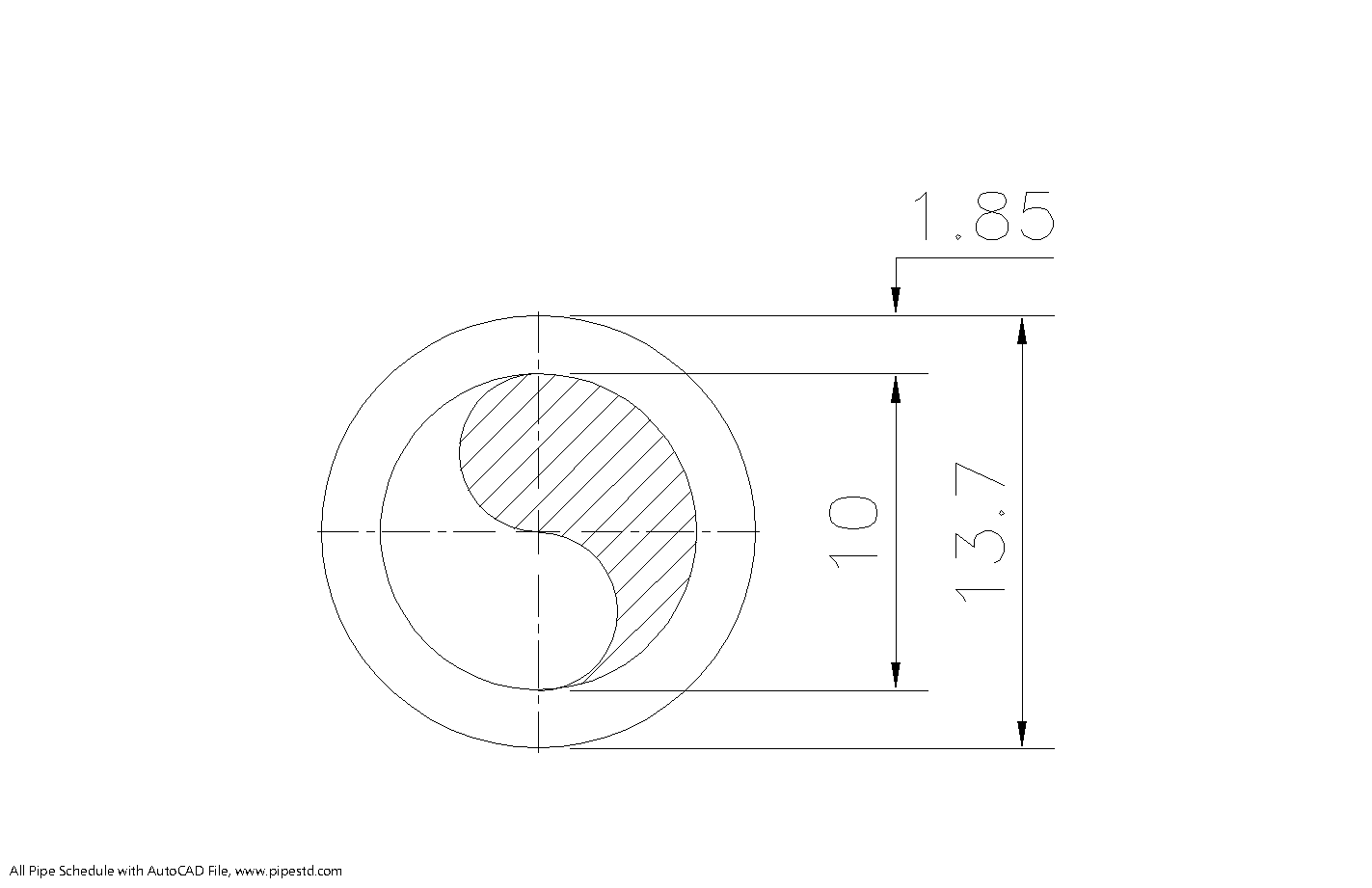
Use this reference when you need a quick dimensional check for Schedule 30 pipe 1/4 inch (DN8) in a drawing, material takeoff, or piping study. The page separates nominal size terminology from the listed outside diameter, inside diameter, wall thickness, and unit weight so the data can be applied consistently across design and drafting tasks.
For comparison with the next small-bore size, see the related Schedule 30 Pipe 3/8 Inch (DN10) reference. When using either page for a project, confirm the applicable material specification, dimensional standard, fitting details, and design requirements before releasing drawings or procurement documents.
Schedule 30 pipe 1/4 inch (DN8) is a small steel pipe size commonly used in piping design, drafting, fabrication, estimation, and utility layout work. This page provides the standard dimensions, wall thickness, inside diameter, and weight per meter for NPS 1/4 Schedule 30 pipe based on ASME B36.10.
For engineers, designers, estimators, and CAD users, quick access to accurate pipe data helps improve piping layout, support planning, weight checks, material takeoff, and fabrication coordination during project development.
1/4 Inch Schedule 30 Pipe Dimensions
- Nominal Pipe Size (NPS): 1/4 inch
- Diameter Nominal (DN): DN8
- Outside Diameter (OD): 13.7 mm
- Wall Thickness: 1.85 mm
- Inside Diameter (ID): 10 mm
- Pipe Weight: 0.54 kg/m
- Pipe Weight Including Water: 0.61 kg/m
- Standard: ASME B36.10
Schedule 30 Pipe 1/4 Inch Data Table
| NPS | DN | Outside Diameter (OD) | Wall Thickness | Inside Diameter (ID) | Weight |
|---|---|---|---|---|---|
| 1/4 inch | DN8 | 13.7 mm | 1.85 mm | 10 mm | 0.54 kg/m |
Understanding 1/4 Inch Schedule 30 Pipe
1/4 inch Schedule 30 pipe is a small steel pipe size used as a reference in industrial piping layouts, utility systems, compact water lines, process design studies, and CAD drafting. With an outside diameter of 13.7 mm and a wall thickness of 1.85 mm, this pipe size is suitable for small-bore piping applications where compact dimensions and standard wall thickness data are important.
What Does Schedule 30 Mean?
Schedule 30 refers to the wall thickness series of the pipe. For NPS 1/4, Schedule 30 gives a wall thickness of 1.85 mm. The schedule affects the inside diameter, total pipe weight, fabrication planning, and compatibility with supports, fittings, and installation requirements.
Why These Pipe Dimensions Matter
Accurate pipe dimension data is important for piping layouts, spool drawings, support design, structural load review, and material takeoff. Knowing that this pipe weighs 0.54 kg/m helps with transport estimates, support planning, and quantity calculations. If the pipe is filled with water, the total weight increases to 0.61 kg/m, which is useful for operating load checks.
Common Uses of DN8 Schedule 30 Pipe
DN8 Schedule 30 pipe may be referenced in utility systems, small process lines, plant layout studies, piping documentation, and engineering design work. It is also useful for piping designers, CAD users, estimators, and procurement teams who need standard steel pipe dimensions for very small piping systems.
Difference Between NPS 1/4 and DN8
NPS 1/4 is the inch-based nominal pipe size designation, while DN8 is the metric nominal diameter reference. Both refer to the same pipe size category on this page. The actual standard outside diameter for this size is 13.7 mm.
How to Use This Data
You can use this page to quickly check:
- pipe outside diameter for layout and clearance
- inside diameter for flow reference
- wall thickness for schedule comparison
- weight per meter for estimation and transport planning
- water-filled weight for support and structural load review
Quick Reference for Schedule 30 Pipe 1/4 Inch
- Pipe Size: 1/4 inch
- DN: DN8
- OD: 13.7 mm
- ID: 10 mm
- Wall Thickness: 1.85 mm
- Weight: 0.54 kg/m
- Weight Including Water: 0.61 kg/m
- Reference Standard: ASME B36.10
Related Pipe Size Pages
Conclusion
Schedule 30 Pipe 1/4 Inch (DN8) is an important small steel pipe reference for piping design, drafting, estimation, and fabrication work. With its 13.7 mm outside diameter, 1.85 mm wall thickness, and 0.54 kg/m pipe weight, it provides useful dimensional data for engineers and designers who need fast and accurate pipe information.
Note: NPS = Nominal Pipe Size, DN = Diameter Nominal. Dimensions and weights shown here are based on ASME B36.10 steel pipe data.
How to Read This Pipe Reference
The listed NPS and DN designations identify the nominal size category; they should not be treated as a direct statement of the measured bore or outside diameter. For layout work, use the stated outside diameter for envelope, clearance, and support-location checks. Use the listed inside diameter as the dimensional reference for bore-related reviews, while recognizing that fittings, joints, corrosion allowance, and manufacturing tolerances may require separate project checks.
Schedule, Wall Thickness, and Design Review
In this reference, the schedule identifies the pipe wall-thickness series associated with the nominal size. It is not, by itself, a complete pressure-design qualification. Pressure, temperature, material grade, corrosion allowance, joining method, code requirements, and manufacturing conditions must be evaluated using the governing project documents and applicable engineering rules.
Using the Weight Data in Drawings and Takeoffs
The dry unit weight is useful for material estimates, handling studies, support reactions, and line-list reviews. The water-filled value represents a different operating condition and should not be combined with other contents or insulation assumptions without checking the load case. For a support or structural review, account for the complete piping assembly, including fittings, valves, supports, insulation, contents, and any specified test condition.
CAD and Procurement Checks
Before placing this data in a CAD block, spool drawing, or bill of materials, verify that the selected fittings and flanges use compatible dimensional references. Small-bore piping can be especially sensitive to connection details and clearances, so the pipe table should be used alongside the project piping specification and component manufacturer’s documentation.
Frequently Asked Questions
What do NPS 1/4 and DN8 mean?
NPS 1/4 is the inch-based nominal pipe size designation, while DN8 is the corresponding metric nominal reference used for the same size category in this page.
Does Schedule 30 define the pipe pressure rating?
No. Schedule 30 identifies a wall-thickness series for the listed nominal size. Pressure capability requires a separate engineering review that considers material, temperature, corrosion allowance, joining details, applicable code requirements, and project service conditions.
Which dimension should be used for piping layout?
Use the listed outside diameter for the physical envelope, clearances, and support coordination. Use the listed inside diameter for bore-related reference checks. Connection and fitting dimensions should be verified separately.
How should the water-included weight be used?
Use it as a reference for the stated water-filled condition. A complete operating or test load review may also need fittings, valves, supports, insulation, other contents, and project-specific load cases.
Can this data be used directly in a CAD drawing?
It can support preliminary layout and drafting, but the final drawing should be checked against the project specification, compatible component dimensions, material requirements, and the governing design documents.