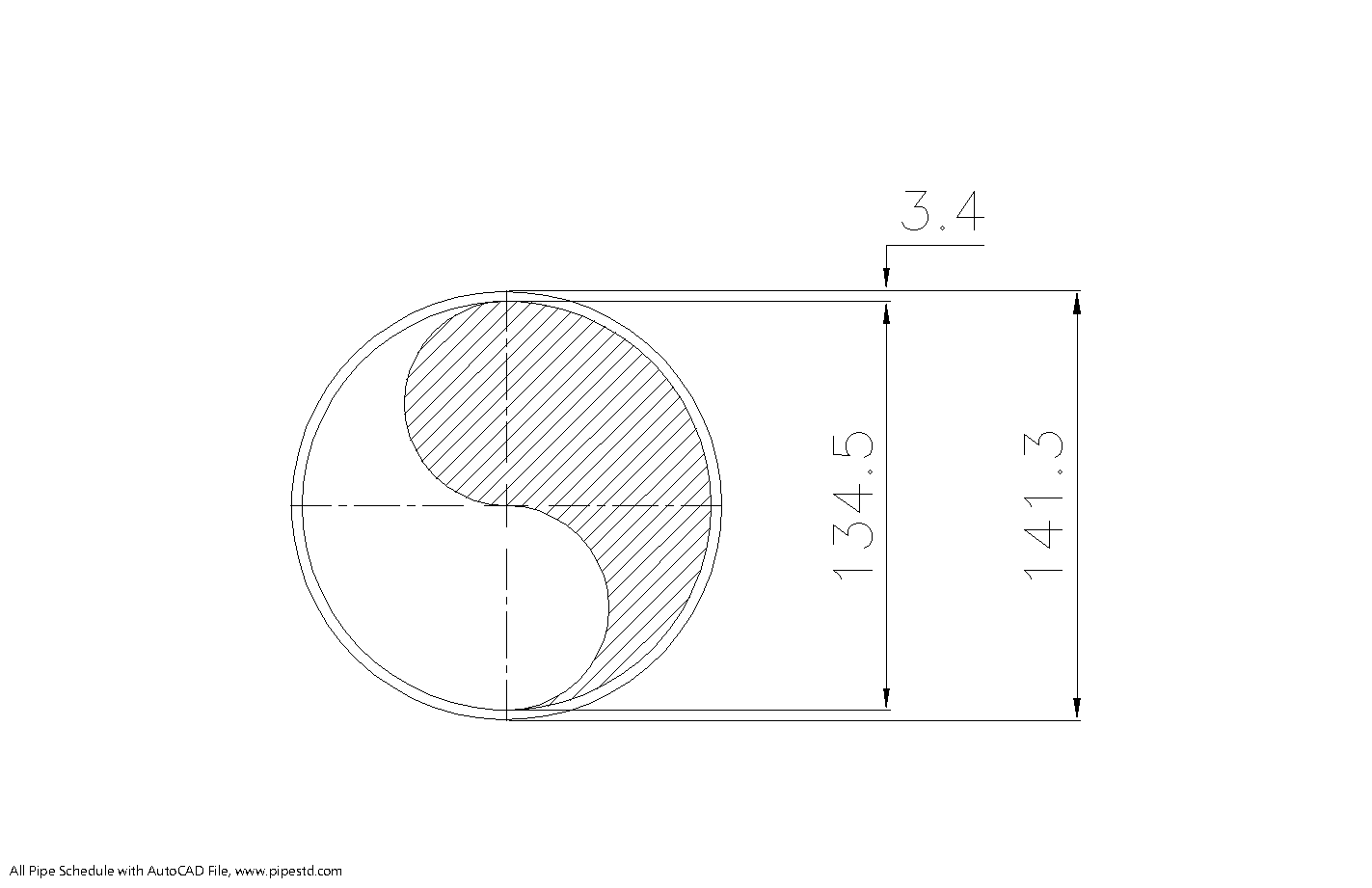
This reference page summarizes the dimensional data for 5 inch Schedule 10 pipe, also identified as NPS 5 and DN125. Use the table and notes below when checking piping layouts, preparing material takeoffs, coordinating fittings, or reviewing fabrication drawings. The listed dimensions are presented as a reference for steel pipe work and should be checked against the applicable project specification and purchased product documentation.
For related design work, compare this entry with the site’s references for pipe schedules, pipe fittings, flange dimensions, and pipe support planning. Those topics help connect a straight-pipe dimension check with the components and installation conditions used in a complete piping system.
Schedule 10 pipe 5 inch (DN125) is a standard steel pipe size commonly used in piping design, fabrication, drafting, and estimation work. This page provides the standard dimensions, wall thickness, inside diameter, and weight per meter for NPS 5 Schedule 10 pipe based on ASME B36.10.
5 Inch Schedule 10 Pipe Dimensions
- Nominal Pipe Size (NPS): 5 inch
- Diameter Nominal (DN): DN125
- Outside Diameter (OD): 141.3 mm
- Wall Thickness: 3.4 mm
- Inside Diameter (ID): 134.5 mm
- Pipe Weight: 11.56 kg/m
- Pipe Weight Filled With Water: 25.76 kg/m
- Reference Standard: ASME B36.10
Schedule 10 Pipe 5 Inch Data Table
| Pipe Size | DN | OD (mm) | Wall Thickness (mm) | ID (mm) | Weight (kg/m) |
|---|---|---|---|---|---|
| 5 inch | 125 | 141.3 | 3.4 | 134.5 | 11.56 |
What Does Schedule 10 Mean?
Schedule 10 refers to the wall thickness series of the pipe. For the same nominal pipe size, the outside diameter remains fixed while the wall thickness changes depending on the schedule. A thicker wall generally increases pipe weight and reduces the inside diameter.
Typical Uses of 5 Inch Schedule 10 Pipe
NPS 5 Schedule 10 pipe is commonly used in water transfer lines, utility systems, low-pressure process piping, drainage applications, and general fabrication work where a lighter wall thickness is suitable. It is also a practical reference size for material takeoff, support planning, and piping layout.
Why Pipe Weight Matters
Pipe weight per meter is important for transport planning, support design, structural loading, fabrication estimates, and lifting calculations. Even in smaller piping systems, installed weight can affect support spacing, handling methods, and project cost.
5 Inch Schedule 10 Pipe Calculation Notes
The listed weight is based on standard steel pipe dimension data using the outside diameter and wall thickness of the pipe. Actual product weight may vary slightly depending on manufacturing tolerance, material grade, and supplier standard.
Frequently Asked Questions
What is the outside diameter of 5 inch Schedule 10 pipe?
The outside diameter is 141.3 mm.
What is the wall thickness of DN125 Schedule 10 pipe?
The wall thickness is 3.4 mm.
What is the inside diameter of NPS 5 Schedule 10 pipe?
The inside diameter is 134.5 mm.
How much does 5 inch Schedule 10 pipe weigh?
The approximate weight is 11.56 kg/m.
Which standard covers this pipe size?
This dimension data is based on ASME B36.10 for welded and seamless wrought steel pipe.
Conclusion
Schedule 10 pipe 5 inch (DN125) has an outside diameter of 141.3 mm, wall thickness of 3.4 mm, inside diameter of 134.5 mm, and a weight of 11.56 kg/m. It is a useful reference for piping design, drafting, estimating, and fabrication work.
How to Use This 5 Inch Schedule 10 Pipe Reference
Start with the nominal designation rather than treating “5 inch” as the measured outside diameter. In this entry, the nominal size is paired with the DN designation used in metric-oriented piping documentation. The outside diameter is the key connection and layout reference, while wall thickness and inside diameter are useful for checking clearances, flow-path assumptions, and compatibility with related components.
The schedule identifies a wall-thickness series for a given nominal pipe size. It is therefore best read together with the pipe size and outside diameter, not as a standalone description of service conditions. Schedule designation alone does not establish an allowable pressure, temperature limit, corrosion allowance, or material grade. Those items require the project design basis, piping specification, applicable code requirements, and manufacturer or supplier documentation.
Drafting and Estimating Considerations
- Use the stated outside diameter when coordinating pipe routing, clamp locations, sleeves, and connections to fittings or flanges.
- Use the inside diameter when an application requires an internal-clearance or flow-area check.
- Use the listed mass per meter for preliminary material takeoffs, handling discussions, and support-load studies.
- Keep the pipe-only weight separate from the water-filled value when reviewing operating or temporary handling conditions.
- Confirm the material specification, manufacturing tolerance, end preparation, coating, lining, and actual supplier data before procurement or final design.
For CAD work, the accompanying DWG resource can support layout development, but the drawing should still be reviewed against the project’s modeling conventions and the selected fittings, valves, gaskets, and flanges. A straight-pipe reference does not by itself define the complete geometry of a piping assembly.
Related Pipe Reference Topics
Readers comparing this size with other wall series may benefit from an internal link to the site’s Schedule 10 pipe chart and a broader pipe dimensions and weight chart. Additional useful references include NPS and DN pipe size conversion, steel pipe wall thickness, pipe flange dimensions, and piping material takeoff guidance.
Additional Questions About NPS 5 Schedule 10 Pipe
Are NPS 5 and DN125 the same pipe designation?
They are the nominal designations used for the same size reference in this entry. NPS is the inch-based designation, while DN is the metric nominal designation. Neither term should be interpreted as the exact measured inside or outside diameter.
Does Schedule 10 specify the pipe material grade?
No. The schedule describes the wall-thickness series associated with the nominal pipe size. Material grade, manufacturing requirements, corrosion allowance, and service limitations must be confirmed separately in the project specification and product documentation.
Can the listed weight be used as the final installed piping weight?
It is a useful pipe-weight reference, but final installed weight may also include contents, fittings, flanges, valves, supports, coatings, insulation, and other attached items. Use the appropriate project data for structural and support calculations.
Why should the DWG file be checked before use?
A CAD reference can help with drafting and layout, but users should verify units, insertion scale, layer conventions, connection details, and coordination with the selected components before incorporating it into a project model.