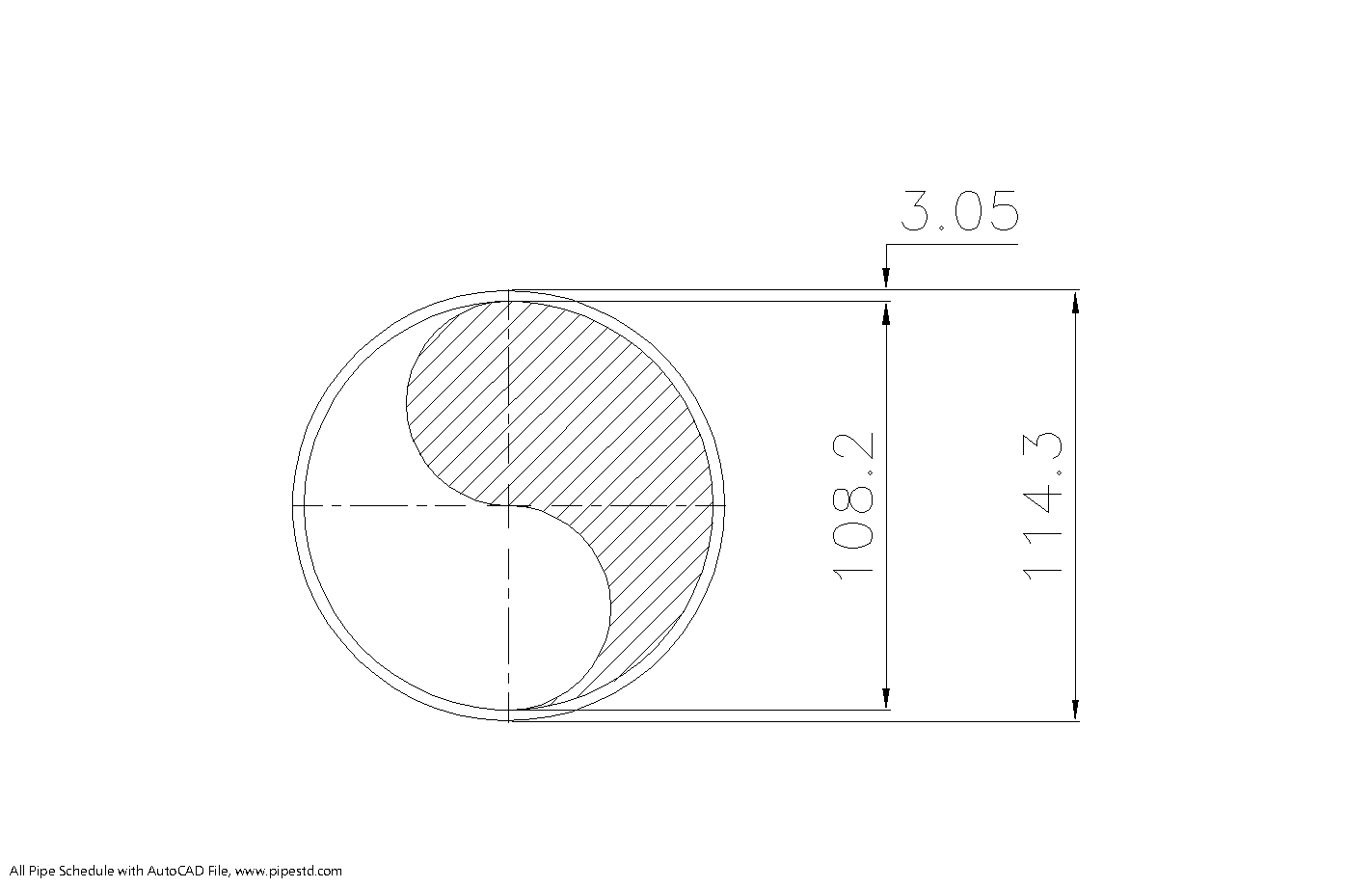
This reference page gives the key dimensional and weight data for Schedule 10 pipe 4 inch, also identified as NPS 4 and DN100. Use the table for quick checks during piping layout, material takeoff, fabrication planning, and CAD drafting. The explanations below clarify how nominal size, outside diameter, wall thickness, inside diameter, and schedule designation relate to one another.
For broader project work, compare this page with the site’s related references for pipe schedules, steel pipe dimensions, pipe fittings, flanges, and piping CAD/DWG resources. Those topics help connect a straight-pipe dimension check with the fittings, connections, and drawings used in an actual piping system.
Schedule 10 pipe 4 inch (DN100) is a standard steel pipe size commonly used in piping design, fabrication, drafting, and estimation work. This page provides the standard dimensions, wall thickness, inside diameter, and weight per meter for NPS 4 Schedule 10 pipe based on ASME B36.10.
4 Inch Schedule 10 Pipe Dimensions
- Nominal Pipe Size (NPS): 4 inch
- Diameter Nominal (DN): DN100
- Outside Diameter (OD): 114.3 mm
- Wall Thickness: 3.05 mm
- Inside Diameter (ID): 108.2 mm
- Pipe Weight: 8.37 kg/m
- Pipe Weight Filled With Water: 17.56 kg/m
- Reference Standard: ASME B36.10
Schedule 10 Pipe 4 Inch Data Table
| Pipe Size | DN | OD (mm) | Wall Thickness (mm) | ID (mm) | Weight (kg/m) |
|---|---|---|---|---|---|
| 4 inch | 100 | 114.3 | 3.05 | 108.2 | 8.37 |
What Does Schedule 10 Mean?
Schedule 10 refers to the wall thickness series of the pipe. For the same nominal pipe size, the outside diameter remains fixed while the wall thickness changes depending on the schedule. A thicker wall generally increases pipe weight and reduces the inside diameter.
Typical Uses of 4 Inch Schedule 10 Pipe
NPS 4 Schedule 10 pipe is commonly used in utility systems, water transfer lines, low-pressure process piping, drainage applications, and general fabrication work where a lighter wall thickness is suitable. It is also a practical reference size for material takeoff, support planning, and piping layout.
Why Pipe Weight Matters
Pipe weight per meter is important for transport planning, support design, structural loading, fabrication estimates, and lifting calculations. Even in smaller piping systems, installed weight can affect support spacing, handling methods, and project cost.
4 Inch Schedule 10 Pipe Calculation Notes
The listed weight is based on standard steel pipe dimension data using the outside diameter and wall thickness of the pipe. Actual product weight may vary slightly depending on manufacturing tolerance, material grade, and supplier standard.
Frequently Asked Questions
What is the outside diameter of 4 inch Schedule 10 pipe?
The outside diameter is 114.3 mm.
What is the wall thickness of DN100 Schedule 10 pipe?
The wall thickness is 3.05 mm.
What is the inside diameter of NPS 4 Schedule 10 pipe?
The inside diameter is 108.2 mm.
How much does 4 inch Schedule 10 pipe weigh?
The approximate weight is 8.37 kg/m.
Which standard covers this pipe size?
This dimension data is based on ASME B36.10 for welded and seamless wrought steel pipe.
Conclusion
Schedule 10 pipe 4 inch (DN100) has an outside diameter of 114.3 mm, wall thickness of 3.05 mm, inside diameter of 108.2 mm, and a weight of 8.37 kg/m. It is a useful reference for piping design, drafting, estimating, and fabrication work.
How to Read the 4 Inch Schedule 10 Data
The listed 4 inch designation is a nominal pipe size, not a direct measurement of the outside or inside diameter. The corresponding metric designation is DN100. For fabrication and drawing work, the outside diameter is the controlling reference for many external connections, clamps, supports, and fitting interfaces, while the inside diameter is useful for internal clearance and flow-area checks.
Schedule 10 identifies a wall-thickness series. It should not be treated as a complete description of pressure capability or service suitability. A piping engineer must also verify the material specification, temperature, pressure, corrosion allowance, joining method, applicable design code, and supplier documentation before approving a pipe for service.
Why the Inside Diameter Is Important
The inside diameter is derived from the outside diameter and wall thickness shown in the source data. It provides a practical reference for flow calculations, internal clearance, lining considerations, and compatibility with connected components. Actual fabricated or supplied dimensions can be affected by manufacturing tolerances and product requirements, so the project specification and certified material information remain important for final verification.
Using the Weight Data in Project Work
The listed pipe weight is useful for material estimates, transport planning, support-load reviews, lifting plans, and fabrication costing. The water-filled value represents the combined pipe-and-water condition shown in the source data; it should not be confused with the empty pipe weight. Installed load checks should also account for insulation, coatings, valves, fittings, contents, support reactions, and other project-specific loads when applicable.
Related Drafting and Reference Work
When this dimension is used in a model or drawing, check connected elbows, tees, reducers, flanges, valves, and supports against their own dimensional references. A dedicated DWG download is available with this page for users who need a drawing reference, while the site’s fitting and flange pages can help with connection geometry and drafting coordination.
Practical Questions About This Pipe Size
Is 4 inch the same as DN100?
For this reference, NPS 4 is identified with DN100. The nominal labels are related designations, while the actual outside and inside dimensions must be taken from the applicable dimensional data.
Does Schedule 10 determine the pipe pressure rating?
No. Schedule identifies a wall-thickness series, but pressure suitability depends on additional factors such as material, temperature, corrosion allowance, manufacturing specification, and the governing design code. Do not select a pipe for service from the schedule designation alone.
Can the listed weight be used for support design?
It can serve as a reference input for preliminary estimates and load review. Final support design should include the complete installed condition, including contents and attached components, and should be checked by the responsible engineering team.
Why might supplier weight differ from the reference value?
Small differences can result from manufacturing tolerances, material condition, product specification, and the supplier’s calculation or measurement basis. Use certified supplier data when procurement or final fabrication documentation requires it.